
Aging well has ceased being an issue of merely adding years to life but rather adding vitality in each stage of adulthood. From busy professionals to fitness enthusiasts, many healthy adults are seeking proactive methods of maintaining energy, skin, mental clarity, and recovery. IV hydration therapy has found its position in the wellness and med-spa industry as a new trend aimed at helping healthy individuals to stay at their best, not to treat illness.
Staying youthful starts at the cellular level
The body cells should be well functioning to enable healthy aging. Water is an important element in cellular metabolism, circulation, nutrient delivery, and waste elimination (Malik et al., 2023). Mild dehydration has an impact on energy levels, mood, and cognitive performance. Thus, poor hydration can also affect the skin elasticity and general physical performance.
While consuming water remains important, daily activities, sporting activities, traveling, alcohol, and stress may present a challenge in ensuring that the necessary hydration is maintained at all times. This is where IV hydration therapy that will play its role in the wellness industry as an supporting method for balance and performance.
What IV hydration therapy offers healthy adults?
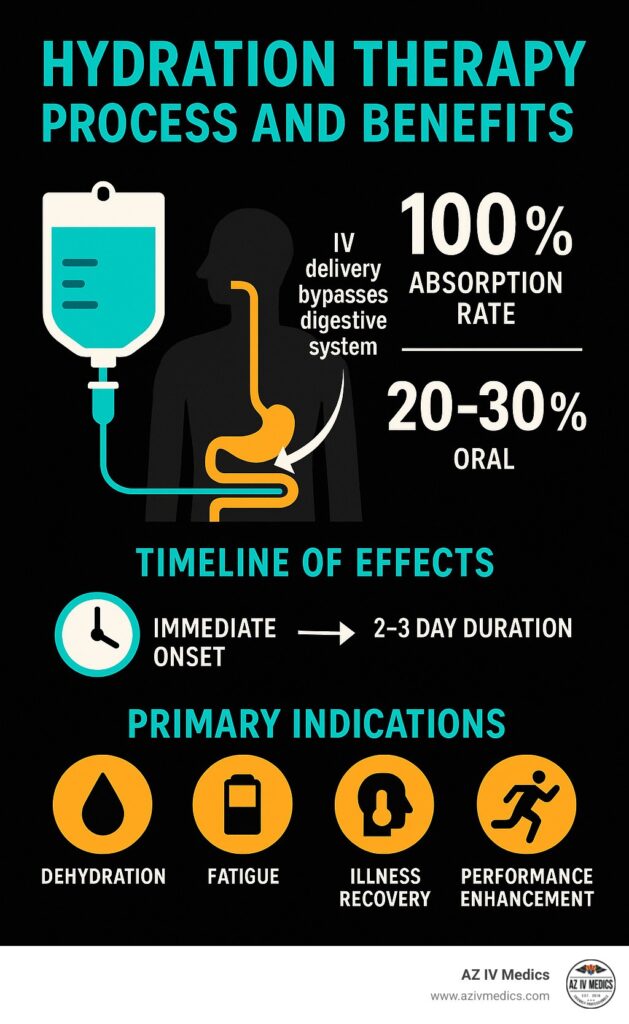
The IV hydration therapy is administered directly into the blood, which enables the patient to have the water, electrolytes, and some vitamins instantly. In the case of a healthy adult, its application is wellness based and not disease treatment.
Key wellness-focused benefits supported by physiological research include:
• Effective hydration through bypassing the digestive system.
• Support for skin health, as hydration contributes to skin turgor, elasticity, and overall appearance
• Energy and mental activity support, particularly in case of poor hydration and micronutrient state.
• Exercise recovery as fluids and electrolytes are involved in muscle activities and recovery.
The research in the nutrition and hydration area confirms that adequate fluid and electrolyte balance is significant to physical and mental performance in healthy adults (Pence et al., 2025). This justifies the reasoning that hydration-based wellness intervention programs are essential.
IV hydration as part of a longevity-oriented lifestyle
The IV hydration therapy is not being positioned as an alternative to a healthy habit but instead it is a supplement to it. The primary focus for adults who desire to remain young is on hydration, balanced nutrition, physical exercise, coping with stress, and sleep. IV hydration can be incorporated in this model since it gives a certain hydration advantage when the need is high such as during stressful exercises, during traveled periods, in high stress schedules, or the protection of nutrient absorption effectiveness with age. In the wellness approach, IV hydration therapy is consistent with the current shift to preventative care, in which people actively contribute to their own health through preventive measures before problems arise (Alangari, 2025).
Safety, , and professional personalization oversight
IV hydration therapy in reputable med-spas is provided with suitable standardized formulations and screening procedures that are oriented towards healthy adults. It should be personalized also as hydration needs vary with age and other characteristics such as lifestyle, the level of activity, and objectives. Evidence-based practice gives emphasis on the right dose, selection of ingredients and professional responsibility to ensure it is safe and effective. IV hydration therapy is widely accepted among healthy people and is becoming popular wellness industry across the world.
References
Alangari A. (2025). To IV or Not to IV: The Science Behind Intravenous Vitamin Therapy. Cureus, 17(6), e86527. https://doi.org/10.7759/cureus.86527
Malik, D., Narayanasamy, N., Pratyusha, V. A., Thakur, J., & Sinha, N. (2023). Biological Roles of Water. In Textbook of Nutritional Biochemistry (pp. 65-77). Singapore: Springer Nature Singapore.
Pence, J., Davis, A., Allen-Gregory, E., & Bloomer, R. J. (2025). Hydration strategies in older adults. Nutrients, 17(14), 2256. https://doi.org/10.3390/nu17142256